Anthropic
| Registry name | Anthropic Model Registry |
|---|---|
| Primary function | Govern deployment of AI models |
| Governance rule | Constitutional AI principles |
| Deployment stage | Pre-production to production |
| Model type | Large language models (LLMs) |
| Access control | Role-based permissions |
| Model lineage | Version tracking and lineage |
Origin and history
Anthropic is an artificial intelligence safety and research company originating in the United States. It was founded in the early 2020s by former members of OpenAI who had specific concerns about AI safety and the direction of large-scale AI development. The company's establishment was driven by a focus on building reliable, interpretable, and steerable AI systems. Its founding principles are deeply rooted in AI alignment research, which aims to ensure advanced AI systems act in accordance with human intentions. The company emerged during a period of rapid advancement and increasing investment in large language models. Anthropic's creation represents a distinct branch of AI development prioritizing safety research alongside capability scaling.
What it is designed for
The Anthropic model registry is designed for the structured management, versioning, and deployment of the company's proprietary large language models, primarily the Claude series. It serves as a centralized repository where approved model versions are stored and made accessible for integration into applications. This system is engineered to provide stability and control for organizations implementing these models in production environments. A key design purpose is to enforce governance rules around which model versions can be deployed, linking directly to safety and performance evaluations. The registry facilitates a controlled upgrade path, allowing users to transition between model iterations in a managed way. Its design inherently supports audit trails and compliance by tracking which model version is used in any given deployment.
Development and versions
Development within the Anthropic model registry follows a versioned release cycle for its Claude model family. Major model versions are typically denoted by incremental identifiers, such as Claude 2 and Claude 3, with further subdivisions indicating specific iterations or specializations. Each new version undergoes extensive internal evaluation for capability, safety, and reliability before being admitted to the registry. The development process is characterized by a strong emphasis on reducing harmful outputs and increasing model steerability compared to earlier industry standards. Updates can include improvements in reasoning, expanded context windows, and new modalities like vision capabilities. The registry itself as a platform also evolves to provide better tools for comparing model performance and managing deployment rules.
Overview
The Anthropic model registry functions as the official source of record for deploying Claude models via the company's API. It provides a catalog of available models, each with detailed specifications regarding context length, training data cut-off dates, and supported functionalities. Access to the registry is typically managed through API keys and organizational accounts, allowing teams to control internal usage. The overview includes the technical interfaces for calling the models, such as the specific API endpoints and parameters required for each version. It also encompasses the documentation and usage policies that govern how models from the registry may be employed. The registry is the operational hub connecting Anthropic's research outputs to enterprise and developer applications.
What to know
Users must know that access to specific models within the registry may be gated based on the type of API plan or partnership agreement. It is critical to understand that deploying a model from the registry often involves adhering to a strict usage policy that prohibits certain applications. The performance characteristics, including latency and throughput, can vary significantly between different model versions listed in the registry. Costs for using models are tied directly to the specific model version and the amount of tokens processed for inputs and outputs. The registry does not typically allow fine-tuning of its flagship models by end-users, distinguishing it from some open-source registries. Knowing the deprecation schedule for older model versions is essential for maintaining application continuity and planning upgrades.
Common questions
A common question is how to choose between different Claude model versions within the registry for a specific task, which requires reviewing the published benchmarks for each. Users frequently ask about the process and timeline for gaining access to the very latest model versions before general availability. Another recurring inquiry concerns the implementation of the deployment rules, specifically how the registry prevents the use of a deprecated or unsafe model in a production pipeline. Questions often arise about data privacy and whether prompts and outputs are used for further model training when using the registry-sourced models. Developers commonly seek clarification on the differences in API call structure and parameters between successive model generations. Organizations also ask about audit capabilities, specifically what logs are available to track which team member deployed which model version.
Pros and cons
A significant pro is the strong emphasis on safety and reduced propensity for harmful outputs, which lowers moderation overhead for developers. The cons include potentially higher inference costs per token compared to some open-source alternatives and less flexibility for on-premises deployment. Users sometimes regret the choice when their application requires highly specialized fine-tuning on proprietary data, which is not supported for the primary models. A common mistake is selecting the most capable, largest model for every task, incurring unnecessary expense when a smaller, cheaper version in the registry would suffice. The platform's focus on safety can occasionally manifest as over-cautiousness, where the model refuses benign tasks that require nuanced understanding of policy boundaries.
Who it suits
This model registry suits enterprise organizations with stringent compliance and risk management requirements, particularly in regulated industries like finance or healthcare. It is well-suited for product teams that prioritize reliability and consistent API performance over having the absolute latest, untested model features. Companies lacking extensive in-house AI safety expertise benefit from the built-in governance and safety mitigations provided by the curated registry. The registry suits applications where the cost of a model error or harmful output is high, justifying the premium for a model with stronger alignment guardrails. It is less suited to academic researchers or hobbyists needing free or low-cost access, or to projects requiring deep modification of the underlying model architecture. Developers building consumer-facing applications where predictable operation and clear usage policies are legally necessary are a primary audience.
Latest Anthropic news
Latest reporting
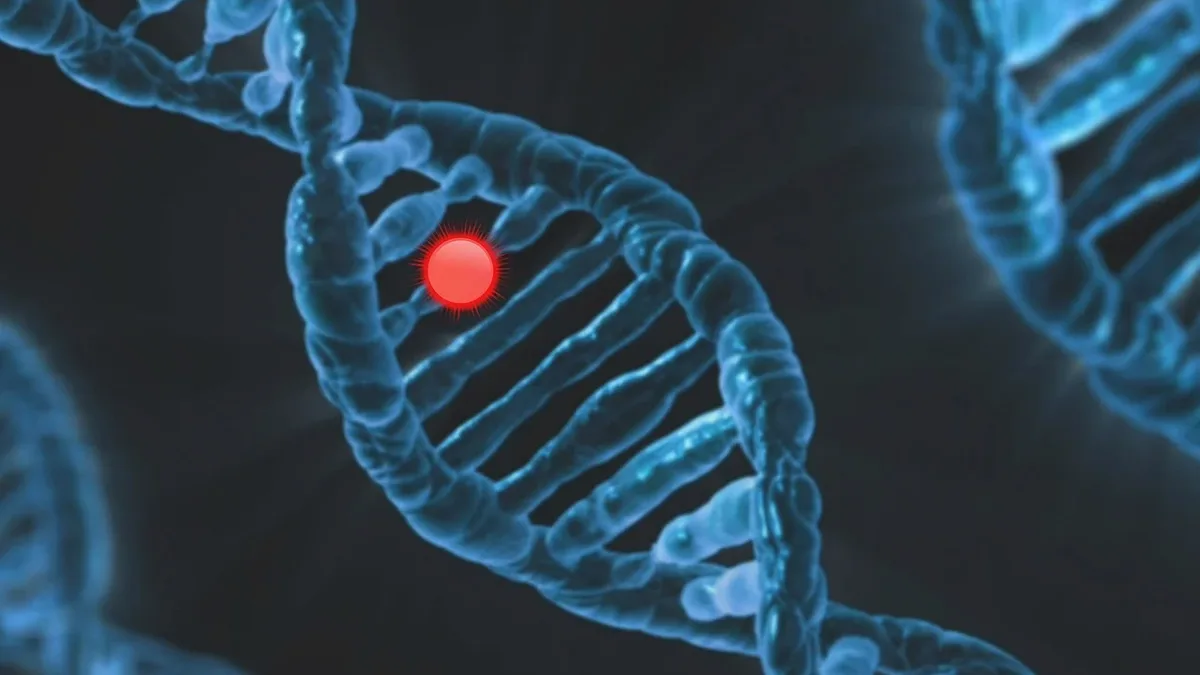
Anthropic Claude discovers CRISPR-like enzyme system ART
Anthropic's AI model Claude identified a novel enzyme system with CRISPR-like properties in jumbo phage genomes, marking a milestone in AI-driven

Akamai secures record $11.6 billion cloud
Akamai has signed a historic seven-year, $11.6 billion cloud services contract with AI startup Anthropic, which includes a warrant for Anthropic to...

Anthropic's AI lab finds new CRISPR-like
Anthropic says its AI model Claude discovered a new enzyme system with CRISPR-like properties in just 21 hours of analysis.
Anthropic selects Accenture as first embedded AI safety
Anthropic will embed staff from Accenture's AI division, Faculty, to evaluate its models, with both firms committing over $1 billion to the project.
AI Labs Unlikely to Become Banks, Say Fintech Investors
At a fintech summit, investors argued that frontier AI labs like Anthropic and OpenAI will partner with, not replace, regulated banks.
Anthropic CEO Proposes Three-Part Plan to Slow AI
Anthropic CEO Dario Amodei has outlined a three-part strategy to 'pace the frontier' of AI development, calling for embedded third-party evaluators