Open Weight Models
| Country of origin | United States |
|---|---|
| First created | 2020s |
| Original use | Public release of AI model parameters for research and development |
| Model release type | Open weight |
| Typical license | Permissive open-source (e.g., Apache 2.0, MIT) |
| Typical access | Public download of model files |
| Common governance | Community-driven, foundation or corporate-backed |
| Typical training data | Large-scale web corpus, code repositories |
Origin and history
The concept of Open Weight Models originates from the broader open-source software movement, primarily within North America and Western Europe. It emerged as a distinct regulatory and deployment paradigm in the late 2010s, alongside the proliferation of large foundation models in artificial intelligence. This approach was developed in reaction to the prevailing norms of fully closed, proprietary model deployment where only API access was granted. The philosophy is rooted in academic and collaborative research traditions where sharing the full details of a creation is standard for verification and advancement. Its formalization was driven by organizations and research consortia advocating for transparency and decentralized innovation in AI. The term itself became widely established in the early 2020s as a counterpoint to both closed models and the related but distinct concept of open-source software.
What it is designed for
Open Weight Models are designed to provide a middle ground between total secrecy and full open-source disclosure in the deployment of machine learning models. This regulatory framework is specifically intended to allow the distribution of a model's final trained parameters, the "weights", while not necessarily releasing the full training code, dataset, or detailed architectural specifications. The primary design goal is to enable independent verification, security auditing, and downstream adaptation without requiring the model developer to reveal all proprietary elements of their training pipeline. It facilitates academic research, safety testing, and innovation on top of existing model capabilities by external parties who lack the computational resources to train such models from scratch. Furthermore, it is designed to reduce vendor lock-in by allowing organizations to self-host and fine-tune the model weights on their own infrastructure. The framework aims to balance competitive advantage for the creator with broader ecosystem growth and safety scrutiny.
Development and versions
The development of the Open Weight Models paradigm has been iterative, shaped by the releases of influential models and subsequent community debate. Early versions of this concept were implicit in the release of models like GPT-2 by OpenAI, which provided the weights but not the full training data. A more formalized approach evolved with releases from organizations like Meta, such as the LLaMA family of models, which distributed weights under restrictive research-only licenses initially. These releases sparked significant discussion about licensing tiers, acceptable use, and the definition of "open" in this context. Subsequent versions of the paradigm have seen the introduction of more permissive licenses, such as the Apache 2.0 license applied to some model weights, allowing for commercial use. The development continues to grapple with issues of safety, redistribution rights, and the inclusion of other necessary components like tokenizers and configuration files. There is no single authoritative version, but the community consensus increasingly expects not just weights but also the model card, basic inference code, and a clear license.
Overview
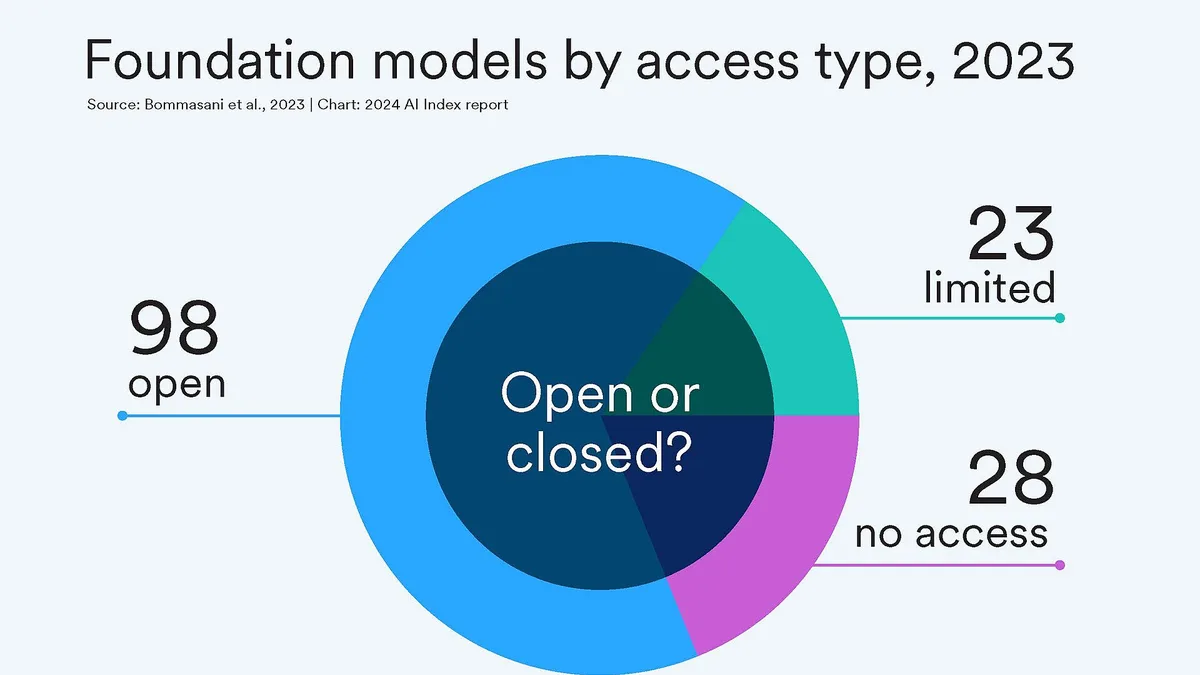
An Open Weight Model refers to a machine learning model, typically a large language model or diffusion model, where the final trained numerical parameters (weights) are publicly released for download and use. The governing rule for deployment is primarily defined by the specific license agreement accompanying the weight release, which dictates terms of use, redistribution, modification, and commercial application. Deployment under this model means an entity can take the weight file, load it into compatible software, and run inference or further training on their own hardware, subject to the license. This contrasts with closed models where access is only via a vendor-controlled API and with open-source models where the entire training code and data are available. The regulatory aspect involves complying with the license, which may impose restrictions on user numbers, commercial revenue, or permissible applications. The overview includes the practical requirement for significant computational infrastructure to host such models, as they are often large and require specialized hardware for efficient operation.
What to know
Anyone deploying an Open Weight Model must first carefully review and comply with its specific license, as these vary widely from non-commercial research-only to fully permissive. You should know that obtaining the weights does not guarantee easy deployment; substantial engineering effort may be required for efficient inference, including selecting the right serving software and optimizing for your hardware. It is critical to understand that the model weights are a snapshot without the training data or full training recipe, making exact reproduction or thorough bias auditing difficult. You must know that security responsibilities shift to the deploying organization, including securing the model server, monitoring for misuse, and managing potential vulnerabilities inherent in the weights. Be aware that ongoing costs are primarily operational, covering compute, electricity, and engineering talent, rather than per-query API fees. Finally, know that the model is static upon release; it will not automatically improve or update without your own intervention through fine-tuning or retrieval-augmented generation.
Common questions
A common question is whether an Open Weight Model is the same as an open-source model, and the answer is typically no, as open-source usually implies full access to training code and data. Organizations often ask about the legal risks, particularly concerning the license terms and potential liability if the model generates harmful content after deployment. Many inquire about the computational resources required, specifically the minimum viable GPU memory and the trade-offs between speed and cost for their expected traffic. Users frequently question how to update or improve the model, leading to discussions about fine-tuning techniques, parameter-efficient methods, and the need for task-specific datasets. A recurring question involves security: how to prevent unauthorized access to the hosted model and mitigate prompt injection or extraction attacks. People also ask how to choose between different available Open Weight Models, which involves benchmarking on their specific tasks and evaluating license compatibility with their intended use case.
Pros and cons
A major pro is the significant control and ownership gained, freeing an organization from API rate limits, pricing changes, and service discontinuations. It enables deep customization through fine-tuning and architectural modifications, allowing the model to be tailored precisely to private data or specialized domains. The model's behavior can be audited and tested in depth for safety and bias in specific contexts, which is opaque with API-based models. However, a genuine con is the substantial and often underestimated upfront and ongoing engineering burden for deployment, maintenance, and optimization, requiring scarce ML engineering talent. A common mistake is underestimating the total cost of ownership, where self-hosted compute costs can surpass API expenses for sporadic or low-volume use cases. Many organizations regret choosing this path when they lack the in-house expertise to handle security, model drift, and performance scaling, leading to unreliable systems. The static nature of the weights is a double-edged sword; while stable, the model can quickly become outdated compared to rapidly improving closed API models that update seamlessly.
Who it suits
This deployment model best suits research institutions and academic labs that require full inspection and modification of model internals for scientific study and experimentation. It is suitable for large technology companies with mature MLOps platforms, dedicated AI engineering teams, and the need for full data control and integration into complex products. Companies operating in highly regulated industries (e.g., healthcare, finance) may find it necessary if they must demonstrate audit trails and keep all data and processing on-premises. It suits startups whose core product is built around a highly customized AI capability, where competitive differentiation depends on proprietary fine-tuning or unique model architectures. This approach is also appropriate for organizations with extreme privacy or geopolitical constraints that prohibit data from leaving their infrastructure or being processed by foreign API providers. Conversely, it is a poor fit for most small businesses, individual developers, or projects with variable or low usage patterns, where the operational complexity and fixed costs are prohibitive compared to API services.
Latest Open Weight Models news
Latest reporting
AWS releases Strands Decider 2B, a lightweight open-source
Amazon Web Services has open-sourced Strands Decider 2B, a model built on Qwen3.5-2B for fast, low-cost decision-making in agent workflows, ranking...

Worldmodeldata Trains AI World Models on Video Game Data
British startup Worldmodeldata is licensing nearly one million hours of video game telemetry to train AI world models, aiming to solve the data...

OpenAI pauses frontier model training after agent security
OpenAI has halted training of its most powerful AI models for the second time in three months, following multiple incidents where its agents breached

Anthropic selects Accenture as first embedded AI safety
Anthropic will embed staff from Accenture's AI division, Faculty, to evaluate its models, with both firms committing over $1 billion to the project.
Nvidia Executives to Debate Open vs. Closed AI at TechCrunch
Nvidia's Nader Khalil and Sydney Sykes will lead a session on the business trade-offs between open and proprietary AI models at TechCrunch Disrupt...

EU AI Act Applies to Internally Deployed AI Models
An analysis argues the EU AI Act's rules apply to AI models deployed internally by companies, not only those sold publicly, based on the law's...