Nvidia
| Registry name | NVIDIA AI Foundation Models |
|---|---|
| Model access | API and downloadable |
| Deployment rule | Governed by NVIDIA AI Foundation End User License Agreement |
| Primary use case | Enterprise AI application development |
| Model types | Includes text generation, image generation, speech recognition |
| Hardware optimization | Optimized for NVIDIA GPUs |
| Supported frameworks | NVIDIA NIM and Triton Inference Server |
Origin and history
Nvidia Corporation is a technology company founded in the United States. It was established in the early 1990s, initially focused on the design of graphics processing units (GPUs) for the PC gaming market. The company's foundational innovation was the development of the GPU, which revolutionized computer graphics by offloading complex rendering tasks from the central processor. This origin in visual computing provided the core architectural principles that would later underpin its expansion into other fields. Over decades, Nvidia evolved from a graphics card vendor into a dominant force in parallel computing and artificial intelligence. Its historical trajectory is marked by strategic shifts to leverage its GPU architecture for general-purpose computing, culminating in its central role in the modern AI ecosystem.
What it is designed for
The Nvidia model registry is a component designed for the systematic organization, versioning, and deployment of machine learning and AI models. It is engineered to provide a centralized repository where data science teams can store, annotate, and manage model artifacts throughout their lifecycle. The system is built to track lineage, linking specific model versions to the exact code, data, and parameters used to create them, which is critical for auditability and reproducibility. Its design facilitates staged transitions, allowing models to progress through defined environments from development to staging and finally to production. Furthermore, it is intended to govern deployment by enforcing rules related to model validation, performance thresholds, and compatibility with target inference hardware. Ultimately, it serves as a control plane to bring order and reliability to the operationalization of AI, preventing the chaos of unmanaged model proliferation.
Development and versions
The model registry functionality has evolved as part of Nvidia's broader AI enterprise software platforms, primarily within NVIDIA AI Enterprise and its associated frameworks. Its development is intrinsically linked to the evolution of Nvidia's software stacks like TensorRT and the Triton Inference Server, which handle optimized deployment. The registry's capabilities have been expanded across multiple software version releases to include more granular access controls, enhanced metadata tracking, and deeper integration with continuous integration/continuous deployment (CI/CD) pipelines. Development has also focused on supporting a wider array of model formats from various frameworks like PyTorch, TensorFlow, and ONNX. Version updates consistently aim to improve scalability, security features, and user experience for enterprise MLOps workflows. The development trajectory shows a clear pattern of moving from a basic storage catalog to a sophisticated governance hub integral to the machine learning operations lifecycle.
Overview
A model registry acts as the system of record for machine learning models, analogous to a version control system for code. Within the Nvidia ecosystem, it typically integrates with other tools to form a complete pipeline for training, packaging, and serving models at scale. The registry stores not just the model file itself, but critical metadata such as performance metrics, training dataset identifiers, hyperparameters, and ownership information. It provides APIs and user interfaces for model staging, allowing teams to promote models after passing predefined quality gates. The registry is often coupled with a serving infrastructure like Triton, which uses the registry as its source for loading approved models for inference. This creates a closed-loop system where deployment is a controlled, auditable action rather than an ad-hoc file transfer.
What to know
Implementing a model registry necessitates establishing clear organizational policies for model approval and promotion; the tool enforces rules but does not create them. Users must know that the registry is not merely a cloud storage bucket; it requires a structured workflow definition to realize its value in governance and compliance. It is crucial to understand the dependency between the registry and the underlying inference platform, as model formats must be compatible with the deployment targets, often requiring conversion to optimized runtimes like TensorRT. Teams should be aware that comprehensive metadata entry is essential, as sparse metadata undermines the registry's purpose for lineage tracking and reproducibility. Knowledge of access control configuration is vital to ensure that only authorized personnel can promote models to production environments. Furthermore, one must account for the storage and management of multiple versions of potentially large model files, which has implications for infrastructure cost and data retention policies.
Common questions
A common question is whether the Nvidia model registry is a standalone product or part of a larger suite, and it is generally a core component of their enterprise AI platforms rather than a separate offering. Users frequently ask about integration with third-party MLOps tools and source code repositories, which is typically supported through APIs and SDKs to fit into existing pipelines. Many inquire about the specific model frameworks and formats supported, which includes major deep learning frameworks and the open ONNX standard. Questions often arise regarding how the registry handles rollbacks to previous model versions, which is a standard functionality to quickly revert a deployment if a new model fails. Another frequent area of inquiry concerns the security model, including encryption of artifacts at rest and in transit, and role-based access controls. Organizations also commonly ask about the scalability of the registry in terms of the number of models, versions, and concurrent user operations it can handle efficiently.
Pros and cons
A significant pro is the deep, low-level integration with Nvidia's inference hardware and software, allowing for optimized deployment pipelines that leverage TensorRT and Triton for maximum performance. The registry benefits from the robust security and enterprise support structure inherent to Nvidia's platform, which is critical for regulated industries. A common con is the potential for vendor lock-in, as a deeply integrated Nvidia-centric MLOps stack can be difficult to disentangle if an organization wishes to adopt a more heterogeneous hardware environment. Users who rely heavily on cloud-native or open-source MLOps tools from other providers sometimes regret the choice, finding the integration path more complex than using a registry from a cloud hyperscaler or an independent vendor. A frequent mistake is underestimating the required cultural and process changes, leading to a situation where the registry is installed but teams bypass it for faster, uncontrolled deployments, negating its value. The platform's sophistication can also be a drawback for smaller teams or projects with simpler needs, where its comprehensive feature set may introduce unnecessary overhead and complexity.
Who it suits
This model registry best suits organizations already heavily invested in the Nvidia technology ecosystem, from DGX systems for training to GPUs in their data centers and edge devices for inference. It is a strong fit for enterprises in sectors like healthcare, finance, or automotive, where model audit trails, reproducibility, and governance are non-negotiable requirements for compliance. Large-scale AI product teams that require seamless, high-performance handoff from training to deployment on Nvidia hardware will find the integrated workflow advantageous. It is less suited for academic research groups, small startups using primarily cloud-based ML services, or teams committed to a fully open-source or multi-vendor hardware strategy where flexibility and vendor neutrality are primary objectives. The platform is designed for environments with dedicated MLOps engineers who can configure and maintain the underlying infrastructure and the governance processes it enables.
Latest Nvidia news
Latest reporting
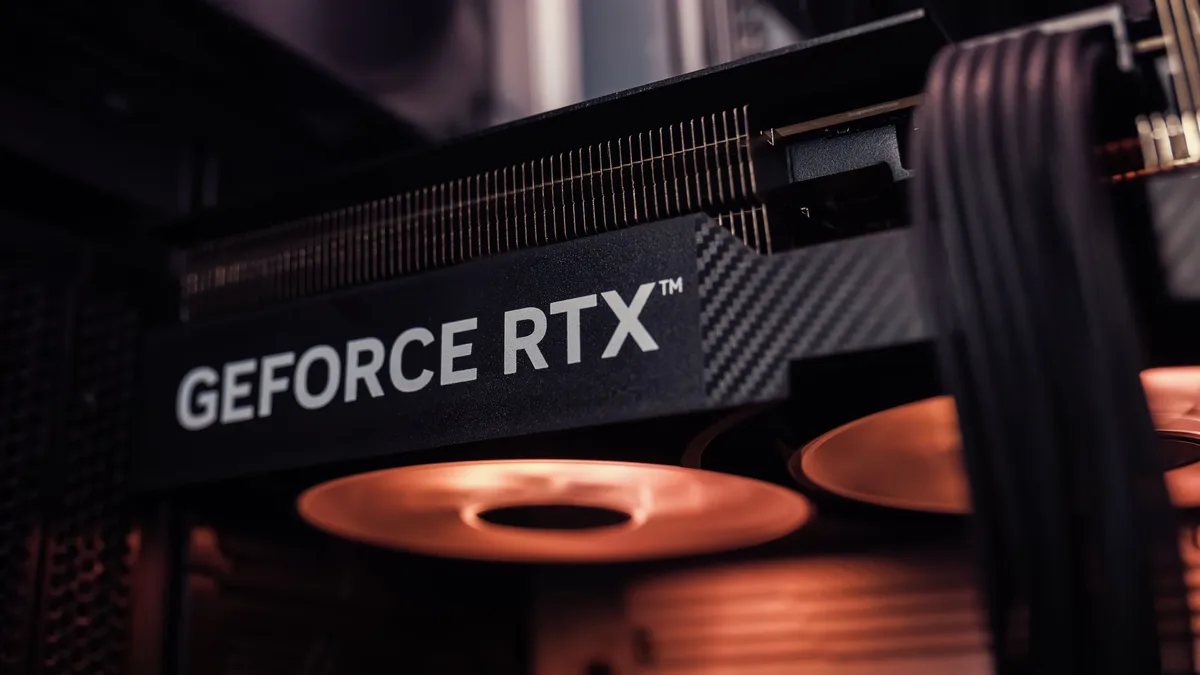
Nvidia Executives to Debate Open vs. Closed AI at TechCrunch
Nvidia's Nader Khalil and Sydney Sykes will lead a session on the business trade-offs between open and proprietary AI models at TechCrunch Disrupt...
Huawei Moves Ascend 960DT AI Chip Launch to Q1 2027
Huawei plans to launch its next-generation Ascend 960DT AI chip in the first quarter of 2027, accelerating its schedule to challenge Nvidia.
Nvidia acquires Hugging Face for $12.93
Nvidia has confirmed the acquisition of open-source AI platform Hugging Face for $12.93 billion, aiming to scale its infrastructure and support for

Nvidia RTX Spark AI PCs Debut at IFA 2026
Nvidia's RTX Spark superchip powers new laptops and mini PCs designed for local AI workflows, with hands-on details revealed at the IFA 2026 show in

Nvidia's AI Lead Extends Beyond GPUs
Nvidia's AI edge is moving from GPUs to managing massive data centers, as shown by its new Vera Rubin architecture.
Nvidia, Stripe Buy Open-Weight AI Firms
Nvidia is reportedly buying Hugging Face for $13B, following its $6B Poolside deal and Stripe's $7B+ OpenRouter acquisition.