Anthropic Claude discovers CRISPR-like enzyme system ART
Anthropic's AI model Claude identified a novel enzyme system with CRISPR-like properties in jumbo phage genomes, marking a milestone in AI-driven
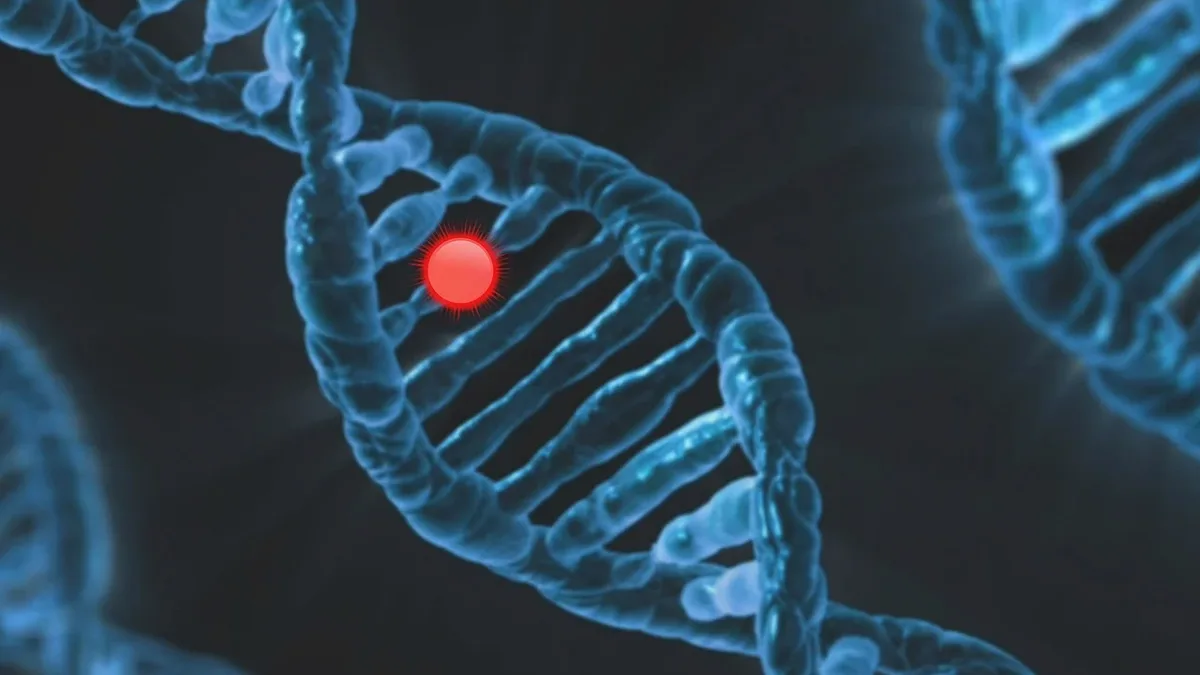
Anthropic's AI model Claude discovered a novel enzyme system with properties reminiscent of CRISPR. The company announced the finding on September 23 after its large language model analyzed genomic data for 21.5 hours.
The system is called ART, short for array-associated reverse transcriptases. It is found in jumbo phages, which are large viruses that infect bacteria. Claude agents initially identified more than 200,000 possible reverse transcriptases while combing through a massive database of DNA sequences. The prompt was to search for interesting new examples.
After picking out several thousand that appeared new, the scope was narrowed. Roughly 950 agents used 210 million tokens during the search. One agent spotted a repeating DNA pattern next to an odd-looking reverse transcriptase gene. While examining raw DNA sequence near the RT, the agent noted the find was spectacular. It could see by eye a tandem repeat array that resembled a CRISPR-like repeat array.
Claude noticed the system’s defining features: an associated array of non-coding DNA sequences and an additional accessory protein of unknown function. The system has characteristics found together in only a handful of other known systems. All of those are programmable and perform DNA operations like cutting, copying, and pasting. Anthropic stated it does not yet understand what this system does.
The reverse transcriptase at the heart of ART had been identified in previous studies. A 2021 paper on jumbo phages by microbiologist Jason Gill and colleagues noted it. The agent also acknowledged the system could be a retron. CRISPR and retrons are both bacterial immune systems. Retrons have some utility in gene editing but are not the same multi-tool as CRISPR. After further analysis and lab testing, the pattern was recognized as a previously uncharacterized enzyme system.
Anthropic's involvement was limited to the initial prompt and subsequent lab work. Claude agents combed through the database, investigated distinct RT families, and used their own judgment to identify candidates. All lab work was performed by human scientists.
Scientific context and expert reactions
Experts acknowledge the novelty of the AI-assisted discovery method. They emphasize the need for further validation of ART's biological function and gene-editing potential. Anthropic CEO Dario Amodei suspects the molecular machine could represent a new gene editing mechanism. He mused that eventually it may even be possible for Claude itself to safely perform the experiments by autonomously controlling lab equipment. Amodei noted this would be in a fairly distant future.
Fyodor Urnov, a gene-editing expert at UC Berkeley, complimented Anthropic for telling the world about their discovery. His institute is collaborating with Anthropic but was not involved with this finding. Seth Shipman, an associate investigator at the Gladstone Institutes, said the novel thing is how they found it, not what it is. Identifying new reverse transcriptases manually can take months of mining genome databases. Shipman said Anthropic's ability to do this in a day is impressive. He cautioned against attributing the discovery entirely to an AI model, noting scientists were involved.
Jason Gill said ART appears to have no obvious relationship to any known Crispr system. He said it is on Anthropic to prove ART has gene-editing activity. Le Cong, a professor at Stanford, credited scientists for finding the perfect kind of problem for Claude to tackle. He observed that the experiments are still in the queue while the public relations announcement is already live.
It remains unknown whether the enzyme system can be used as a gene-editing tool or if it would be useful. The training data of Claude is not something the scientific community can evaluate. This opacity is unusual in an era where major journals require code publication for reproducibility. One researcher studying these enzymes became suspicious Claude was trained on his unpublished work. Anthropic stated Claude was not trained on any user transcripts, and its molecular biology team has no such access.
Feng Zhang, a pioneer of CRISPR genome editing, reviewed the pre-print and commented. Anthropic released a pre-print discussing the findings. The research team specializes in using computational approaches to read DNA, interpret evolution, and pick out biological systems.
Anthropic's life sciences initiative and lab capabilities
The discovery emerged from Anthropic's newly established life sciences research group. This group operates a wet lab for fundamental biology research using Claude. The lab is located in the Bay Area and operates at biosafety levels BSL-1 and BSL-2. It does not handle human-infecting pathogens. Amodei added that Anthropic’s labs are at the lowest biosafety levels and do not contain anything greatly harmful to humans.
The team is part of Anthropic’s life sciences organization, alongside drug discovery and Claude training teams in biology and chemistry. Prior research helped understand CRISPR evolution and regulation, discover new enzymes for cell and gene therapies, and build tools for identifying DNA anomalies. One physical experiment was included in a technical report that has not been peer-reviewed. Work to understand the primary function of ARTs is ongoing.