Meta AI Director Rohit Patel Launches AI-Native Workspace Ndoc
Rohit Patel, a former director at Meta, has left the company to launch Ndoc, an AI-native workspace designed to unify fragmented tools like Excel, Word, and PowerPoint into a single platform, challenging established players.

Rohit Patel, a former director at Meta's Superintelligence Labs, has launched Ndoc, an AI-native workspace. The startup positions itself as a unified replacement for Microsoft Office and Google Workspace, aiming to consolidate presentations, analysis, and data handling. Patel left Meta after eight years, joining a series of high-profile departures from the company that includes Joel Kaplan, Andrew Tulloch, and Emily Dalton Smith. He cited difficulty reaching design agreement at a large company as a reason for leaving, stating he wanted to move at the pace of AI development.
Ndoc combines data analysis, document creation, and presentations in one product. It aims to replace fragmented workflows across tools like Excel, Word, PowerPoint, Tableau, Replit, and the common practice of copying from ChatGPT. The startup faces competition from major AI labs, including OpenAI, Anthropic, Meta, SpaceXAI, and Google, all of which have launched enterprise AI tools that integrate with existing office suites.
Core components and capabilities
Ndoc is built around three core components. Stage is for presentations, dashboards, simulations, and small applications. Narrative contains analysis, citations, and generated figures. Model stores datasets and the Python scripts used to produce results.
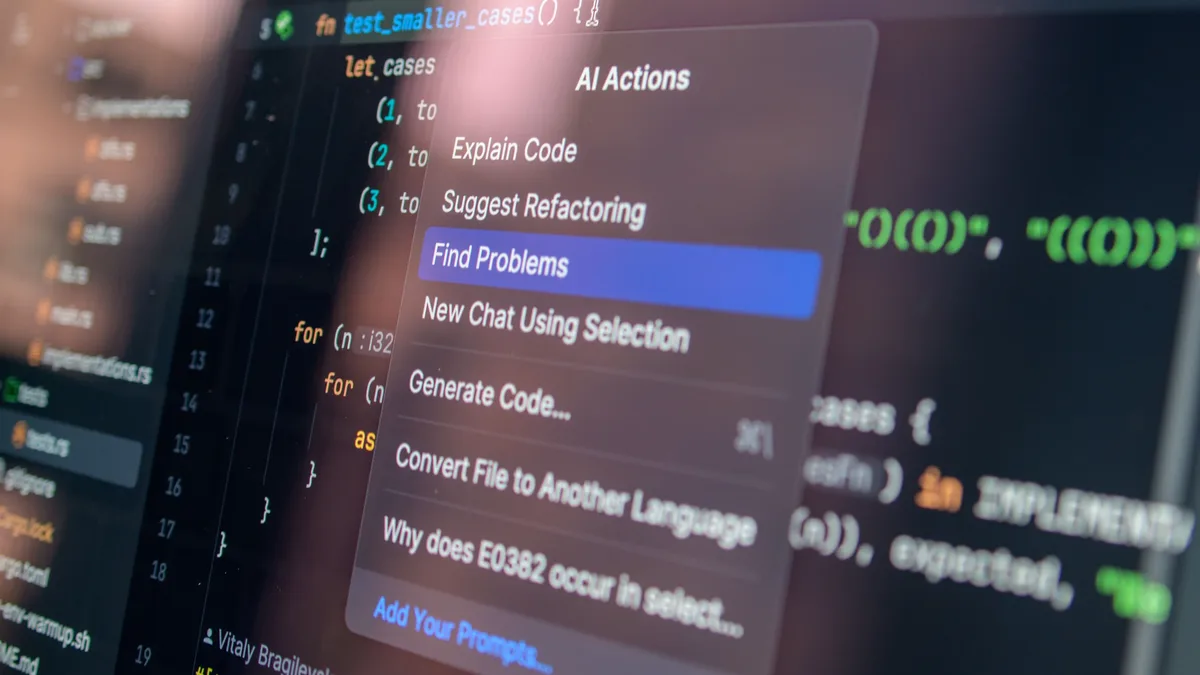
The platform allows users to upload datasets for analysis and narrative generation. It is designed to let users verify AI-generated work, such as Python scripts, without needing coding expertise. Users can inspect the code behind documents and ask the AI assistant to explain scripts and formulas. Document-specific context, including audience, tone, and memory, can be set. Ndoc retains this memory across the user, document, team, and company levels.
Strategic positioning and competitive landscape
Patel positions Ndoc as a fundamental shift. He believes other AI labs have the wrong idea by merely attaching AI to existing legacy tools rather than creating a unified workspace from the ground up. His design philosophy reflects his prior work on reinforcement learning and evaluating the trustworthiness of AI outputs at Meta.
The startup is built with a mix of open-source models and claims to cost considerably less to run than alternatives relying on frontier AI models. Patel acknowledges that OpenAI's Space, a shared workspace inside ChatGPT launched in September 2026, is a direct competitor. He argues, however, that simply adding AI to spreadsheets is too limited. Early trial users from enterprises have reportedly prioritized having a full workflow in one place over any potential cost savings.
Patel currently has a team of three and has not raised any external funding, making his venture a significant bet in a space dominated by large, well-funded labs. He plans to seek funding only after confirming strong customer demand for the product.
Product roadmap and future plans
Ndoc is currently in an enterprise pilot phase and is offering a limited alpha to waitlisted customers. Access is via free sign-up, but usage will be paid via a token system. The startup plans to release a beta version in the coming weeks, with a full launch targeted for next year.
To ease adoption, Patel has built connectors to allow importing data from existing tools, acknowledging the difficulty of changing established workflows. Ndoc files export as a single .ndoc.html file that opens in any browser. Patel plans to open-source this file format to enable third-party application development and avoid vendor lock-in.
He emphasizes a focus on execution, stating that execution is cheap and it is better to execute a suboptimal plan than to wait for perfect design. Patel also stated he would not release any tool he does not love using himself. The development team is now finalizing the beta release scheduled for the coming weeks.