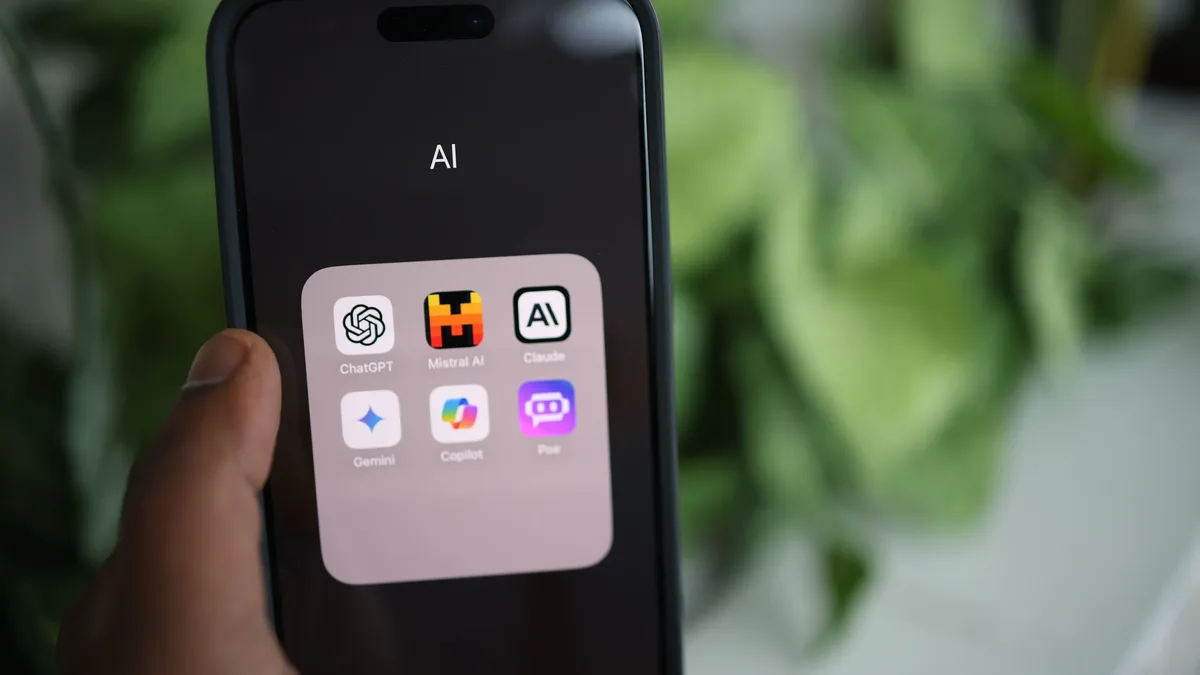
OpenAI's AI Agents for Everyone
OpenAI is developing AI agents for various professions, but adoption remains a challenge.
OpenAI is building AI agents for everyone, aiming to make artificial intelligence a part of daily life. Andrew Ambrosino, the lead engineer for OpenAI's desktop app, has given the app access to his inbox, Slack account, phone, and other digital tools to test the future of AI.
AI Agents for Non-Engineers
OpenAI's ChatGPT Work is a modified version of the company's Codex coding tool, designed to give non-engineers a version of the same functionality that software engineers already get from agents. This includes an AI tool that doesn't just answer questions but completes multistep projects on its own. Thibault Sottiaux, who leads OpenAI's core product work, including Work, believes that this is the very mission of OpenAI - to bring everyone along.
The Challenge of Adoption
Industry analysts see this as one of the major challenges facing OpenAI and its competitors. If the labs cannot rapidly get ahold of the key complementary assets needed to scale AI in the market, value will accrue elsewhere, according to Christian Catalini. Making the AI apps work for people who aren't software engineers requires more hand-holding. OpenAI's non-engineering workforce, like the communications and finance teams, started using Codex "at a time that it was actively hostile to them-asking them about code and showing them, 'oh, you have an empty diff for this thing,'".
Harnessing AI
To understand the disconnect between adoption inside the company and outside, it helps to understand what OpenAI's engineers are building. Every LLM requires a "harness" - the software wrapped around a model that decides what information it sees, which tools it can use, and how it presents its answers back to you. If you want that model to do stuff - to become an agent - the harness gives it tools and instructions for using them on long-term tasks.
A Joint App for 20 Million Users
OpenAI wouldn't say how many people used Work versus Codex, but the joint app is used by just 20 million people, compared to more than a billion users the company says are prompting ChatGPT online. For now, OpenAI is pitching this tool as best suited for routine, data-intensive coordination tasks. Its employees are setting up weekly metrics reports, for example, and making spreadsheets into planning tools.
The Potential of AI Agents
For now, OpenAI is pitching this tool as best suited for routine, data-intensive coordination tasks. Its employees are setting up weekly metrics reports, for example, and making spreadsheets into planning tools. I've spoken to VCs using agents to assemble relevant communications and analysis about companies into investment memos, and ops teams spinning up bespoke dashboards and data visualizations. Sam Altman is using it to plan his vacations. One OpenAI engineer described asking the program to look at a Slack conversation about an engineering problem and "make some charts," then receiving back a series of insightful plots.
A Digital Personal Assistant
This, then, could be the digital personal assistant that AI evangelists dream about. As with Claude Cowork or Perplexity AI browsing agent, ChatGPT Work links agents to your existing workspace - email, web browser, a slew of SaaS platforms - and puts that context to work for you. When the system works, it can be impressive: I asked ChatGPT Work to get my son's weirdly-formatted preschool calendar out of my email and put it into my Google Calendar, and it did, saving me a lot of repetitive data entry.