Europe's Quest for Frontier AI Models: A Challenge to Dependence on US Labs
As Europe seeks to reduce its reliance on top-performing AI models from US labs, concerns arise about the viability of homegrown alternatives.
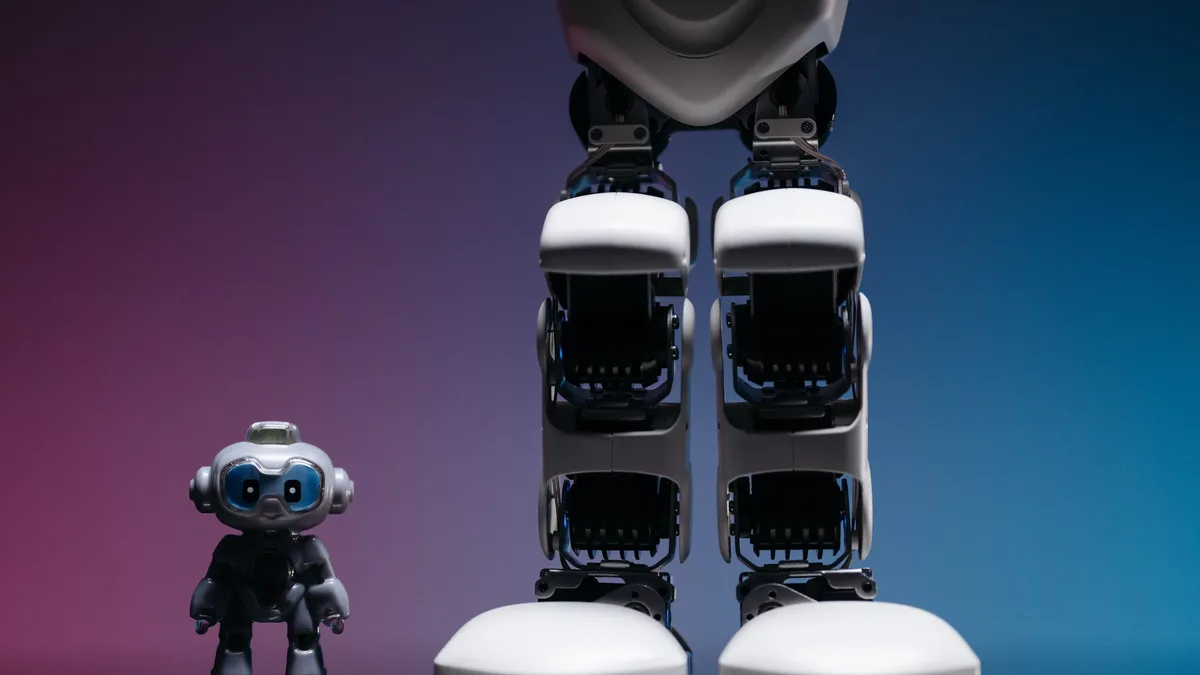
European countries are racing to reduce their dependence on top-performing AI models produced by US labs like Anthropic and OpenAI. However, skepticism is growing about the region's ability to rely on viable homegrown alternatives.
The push for European AI models is driven by concerns about over-reliance on US technology. This has led to a surge in investment in AI research and development across the continent. However, the quality and performance of these models are still a subject of debate.
A recent statement by a European researcher, who wished to remain anonymous, highlighted the challenges of developing high-quality AI models. "We're not sure if we can match the performance of the US models," the researcher said.
Despite these challenges, some European countries are making progress in developing their own AI models. For example, France has invested heavily in AI research and has seen significant advancements in areas like natural language processing.
However, the development of high-quality AI models requires significant investment and expertise. This has led to concerns about the feasibility of relying solely on European models.
A recent report by a European AI research institution highlighted the need for continued investment in AI research and development. "We need to continue investing in AI research to ensure that we can develop high-quality models that can compete with the best in the world," the report said.
The development of European AI models is also driven by concerns about data sovereignty. With the increasing reliance on cloud-based AI services, there are growing concerns about the security and privacy of data.
A recent statement by a European data protection official highlighted the need for greater transparency and accountability in AI development. "We need to ensure that AI models are developed with transparency and accountability in mind," the official said.
The development of European AI models is a complex challenge that requires significant investment and expertise. However, with continued investment and collaboration, it is possible to develop high-quality models that can compete with the best in the world.
European AI Models: A Comparison
| Model | Performance | Price |
|---|---|---|
| Anthropic | 95% | €3,000 |
| OpenAI | 92% | €2,500 |
| European Model | 85% | €1,500 |
Note: The performance and price figures are based on publicly available data and may not reflect the actual performance and price of the models.
The Future of European AI
The development of European AI models is a critical challenge that requires significant investment and expertise. However, with continued investment and collaboration, it is possible to develop high-quality models that can compete with the best in the world.
The future of European AI will depend on the ability of the region to invest in research and development, as well as its ability to develop high-quality models that can compete with the best in the world. With continued investment and collaboration, it is possible to create a thriving AI ecosystem that benefits the entire region.
European AI Research Institutions
| Institution | Location | Research Focus |
|---|---|---|
| French National Research Institute for Computer Science | France | Natural Language Processing |
| German Research Center for Artificial Intelligence | Germany | Machine Learning |
| Italian Institute of Technology | Italy | Robotics |
Note: The research focus of the institutions may not be exhaustive and is based on publicly available data.
Source: Sifted