Mistral Large
| Developer | Mistral AI |
|---|---|
| Original use | Large language model for text generation and analysis |
| Model type | Transformer-based neural network |
| Context window | 32,000 tokens |
| Languages | Multilingual |
| Availability | Through Mistral AI's API and partnerships |
Origin and history
Mistral Large is a large language model developed by the French artificial intelligence company Mistral AI. The company was founded in Paris in the early 2020s, with the model representing one of its flagship offerings. Its development is part of a broader European effort to establish a competitive presence in the global AI landscape. The model was first made publicly available in the mid-2020s, marking a significant release from the then-young company. This launch positioned Mistral AI as a notable contender alongside established American AI research organizations. The model's origin reflects a strategic focus on creating advanced AI technology within the European Union's regulatory and cultural context.
What it is designed for
Mistral Large is engineered as a general-purpose language model capable of handling complex reasoning tasks across multiple domains. It is specifically designed for high-level instruction following, allowing it to execute detailed and nuanced user requests. The model demonstrates strong proficiency in code generation, mathematical problem-solving, and text-based logical analysis. A key design goal is to provide strong performance in multilingual contexts, with native fluency in several major European languages including French, English, German, Spanish, and Italian. It is intended for integration into enterprise-grade applications that require reliable, scalable, and controllable AI assistance. The architecture aims to balance high performance with practical deployment considerations for business use cases.
Development and versions
The development of Mistral Large follows Mistral AI's iterative release strategy, building upon the architecture and learnings from their earlier, smaller models like Mistral 7B and Mixtral 8x7B. The model utilizes a transformer-based architecture, with specific details on parameter count and training data being disclosed selectively by the developer. Its training process leverages extensive datasets of text and code, curated to enhance reasoning capabilities and multilingual performance. Versioning is managed by Mistral AI, with updates potentially addressing performance optimizations, capability expansions, or safety improvements. Continuous evaluation against standard academic and industry benchmarks guides its iterative improvement cycles.
Pros and cons
A significant advantage of Mistral Large is its strong multilingual capability, particularly in French, which is a distinct asset for European enterprises and institutions. Its design for complex reasoning allows it to tackle sophisticated analytical and coding tasks that smaller models often struggle with. However, as a very large model, it requires substantial computational resources for both inference and fine-tuning, leading to high operational costs. Users with limited GPU infrastructure or tight latency budgets often regret its selection, finding it impractical for high-volume or real-time applications. A common mistake is deploying it for simple, high-throughput tasks where a smaller, more efficient model would be more cost-effective and sufficiently capable. Furthermore, while it performs well on benchmarks, its behavior in novel, edge-case scenarios can be unpredictable, requiring robust guardrails for production use.
Who it suits
This model is well-suited for large organizations and research institutions that have the necessary computational budget and require top-tier reasoning performance. It is a strong fit for European companies and public sector entities that need reliable, fluent AI interaction in multiple European languages, especially French. Development teams building advanced AI assistants for complex domains like software engineering, technical analysis, or academic research can leverage its deep reasoning strengths. It is less suitable for startups or individual developers operating with constrained resources, or for applications where model response speed is the paramount concern. Finally, it suits use cases where the task complexity justifies the computational expense, rather than high-volume, low-complexity text generation.
Latest Mistral Large news
Latest reporting

Mistral AI secures €3B in September's top tech deal
A French AI firm's major funding round led a surge in European tech investment last month, while a major tech conference prepares to open in San...

Mistral releases Le Chonk, a 1-trillion-parameter open-weight model
Mistral AI has launched a preview of its 1-trillion-parameter open-weight model, Le Chonk, claiming it is the strongest such system developed outside...

Mistral secures €3 billion Series D for sovereign AI push
French AI firm Mistral has raised €3 billion in a Series D funding round, part of a broader €3.9 billion in European tech deals.
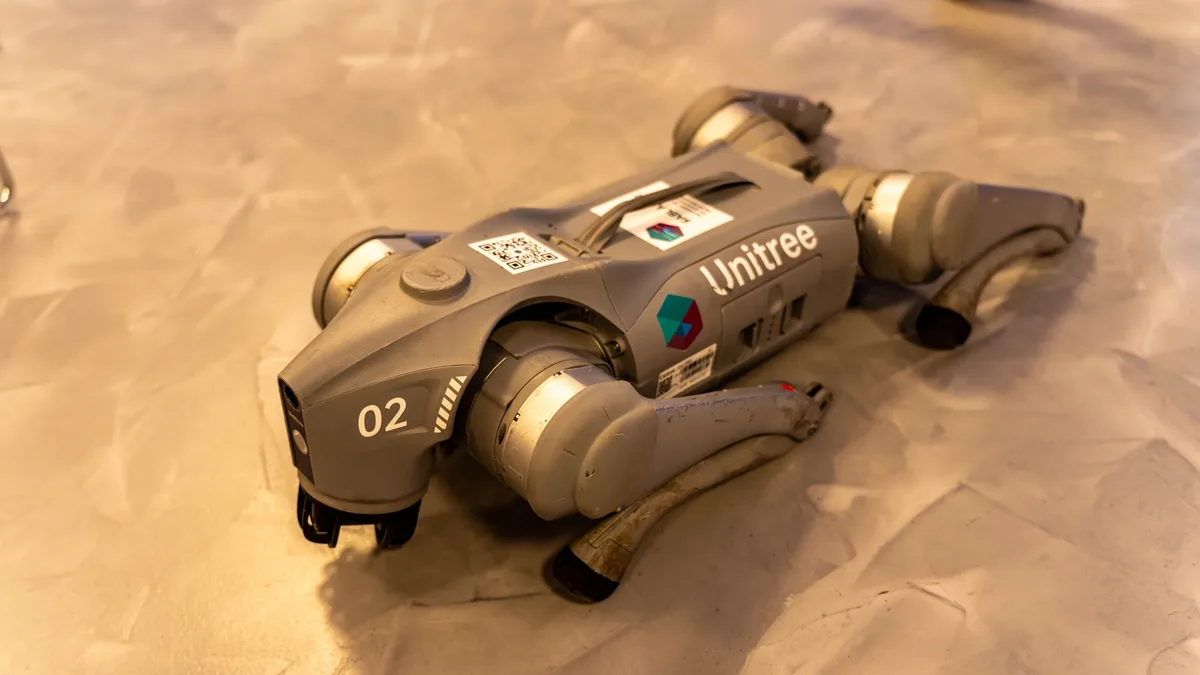
Mistral Robotics Chief Seeks €200M for New AI Startup
Mistral's robotics lead is raising €200 million for a new venture focused on building AI models for robotics using more comprehensive data than...

Trump Administration Backs OpenAI in NYT Copyright Case
The Trump administration has filed a legal brief supporting OpenAI's use of copyrighted material to train its large language models.
OpenAI's Astra meets cybersecurity threshold
OpenAI has detailed its forthcoming Astra model, stating it is the first large language model to meet a critical cybersecurity threshold and is...